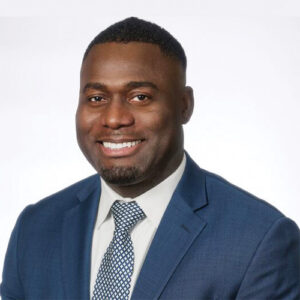
A newly filed pretrial memorandum in former Wayland Superintendent Omar Easy’s lawsuit against the town lays out detailed and sharply conflicting accounts of what happened during his tenure, identifying specific meetings, conversations, employees and School Committee members that could become central to a trial.
The 16-page joint pretrial memorandum, filed Aug. 17 in Middlesex Superior Court, is significant because it puts both sides’ versions of the case in the same document and identifies dozens of potential witnesses. Easy is suing the Town of Wayland and former School Committee leaders Christopher Ryan and Ellen Grieco, alleging race discrimination. The defendants deny the allegations and say Easy was placed on paid administrative leave because of his performance and his creation of what they describe as a hostile and toxic work environment.
Only two substantive facts are identified as agreed upon at the beginning of the filing: Easy is Black, and he began working as superintendent of Wayland Public Schools in July 2021. Nearly everything that follows is presented separately as either Easy’s expected evidence or the defendants’ expected evidence, an important distinction because the allegations have not been established as facts at trial.
Easy’s section of the memorandum begins before he became superintendent. It alleges that racial bias surfaced during Wayland’s 2020 superintendent search, when two of the three finalists were Black.
According to Easy’s filing, Grieco, then-School Committee vice chair, instructed search consultant Lyle Kirtman to look for additional white candidates after learning the racial makeup of the finalist pool. The memorandum alleges the Black finalists were referred to dismissively as “diversity candidates” and that Grieco argued qualified white candidates had been unfairly excluded.
Kirtman resisted efforts to remove the Black finalists, according to the filing, and told the committee that leadership and diversity were not mutually exclusive. Easy’s filing goes further, alleging Grieco said the “Black people” among the candidates were not qualified. The search committee ultimately kept the three finalists.
The filing also revisits questions raised during Easy’s candidacy about his prior employment in Everett. It says Easy was asked whether he had filed an Massachusetts Commission Against Discrimination charge and then accused of having been untruthful about it. Easy’s position is that he understood the original question to be asking whether he had filed a lawsuit, which he had not. He had filed an MCAD charge concerning Everett’s superintendent hiring process, according to his statement.
Easy’s statement says he was hired April 1, 2021, and began his duties July 1. It portrays several controversies that followed not as ordinary management disputes but as examples of Easy being subjected to a level of scrutiny that previous white superintendents had not faced.
One involved superintendent mentoring. The filing says Kirtman and School Committee members, including Ryan, recommended that Easy work with local mentor Paul Ash. Easy told Ryan and School Committee member Jeanne Downs that he intended to opt out of a coaching component through Massachusetts Association of School Superintendents and use professional-development or contractual-services money for Ash instead.
Easy’s filing says that decision was taken into executive session, something it alleges had not occurred with previous white superintendents. It says Easy was ultimately cleared of wrongdoing.
Another dispute erupted over administrator evaluations in summer 2022. Easy gave a number of administrators “needs improvement” ratings, according to the filing. Some administrators objected that he had failed to follow an unwritten protocol and had not provided sufficient written feedback.
The matter again went into executive session and was reviewed by a third party. Easy’s memorandum says the investigation concluded that he had materially complied with the requirements governing the evaluations. His attorneys argue that the episode demonstrates that actions taken by Easy routinely became the subject of extraordinary oversight.
The filing then describes a series of strained relationships with town and school employees.
It alleges former Town Administrator Louise Miller declined to engage in one-on-one professional meetings with Easy and, during a disagreement, characterized his communication as “yelling.” Easy contends that description contributed to a broader stereotype of him as an aggressive Black man and was accepted by the School Committee without sufficient inquiry.
Easy’s filing also names former Wayland Middle School Principal Betsy Gavron and elementary school Principal Tricia O’Reilly as administrators who objected to his leadership style and accused him of intimidation and hostility.
Easy disputes that characterization. His filing says, for example, that he did not discipline O’Reilly after confronting her about COVID policy violations but instead wrote a letter documenting what he viewed as hostile and uncooperative behavior while expressing a desire to continue working with her.
The filing describes another dispute involving employee Ellen Whittemore. Easy’s statement says allegations were made involving physical contact and comments concerning pronouns or sexual orientation. Easy denies putting his hands on Whittemore or making such remarks and alleges the complaint followed her not being selected for an assistant superintendent position.
His filing says he did not promote Whittemore because she carried a prepared resignation letter and he did not want to appoint someone he believed was repeatedly threatening to leave. Those assertions are Easy’s version of the dispute; the defendants’ section of the memorandum does not respond individually to the Whittemore allegations.
One of the most consequential interactions described in the filing occurred at an Oct. 13, 2022, Administrative Council meeting.
Easy says he gave a presentation addressing teacher-on-teacher harassment at multiple schools, including an alleged race-discrimination case at the high school and an exclusion incident at the middle school. He says he was pressing administrators to uphold the district’s anti-racism and anti-bullying principles.
According to Easy’s account, one or more white administrators subsequently complained to Ryan that Easy himself had bullied and intimidated participants at the meeting.
Easy says no administrator challenged his conduct during the meeting, other than engaging him in discussion over a math program, and that Ryan did not subsequently interview him about the complaints or give him an opportunity to explain what had occurred.
Easy’s attorneys contend his energetic and emotional discussion of racial discrimination against a Black teacher, identified in the filing as Mr. Douglas, was interpreted through a racial stereotype rather than viewed in context.
The filing also describes an earlier leadership retreat where an unnamed white employee publicly refused to participate in an introductory exercise. Easy’s filing portrays the refusal as deliberate disrespect for his authority. A footnote says the individual is not named in the memorandum because he later sued Easy in a separate action that was dismissed on anti-SLAPP (Strategic Lawsuit Against Public Participation) grounds.
Race-related incidents involving students and school buildings form another major part of Easy’s expected case.
His statement cites racist graffiti found in the middle school around December 2021, including the N-word, “BLACK PEOPLE DIE” and a message demanding that Black people leave the district. It also cites racist taunts at district events in February 2022 and May 2023, including a basketball game involving Westford, and says METCO students were subjected to racist slurs.
Easy’s filing says he proposed placing cameras in middle school hallways in response to the graffiti, noting that cameras were already in use at the high school.
The memorandum alleges Gavron and middle school teachers responded that Easy was “destroying Wayland’s culture” and “bringing Everett culture to Wayland.” Easy’s attorneys characterize the references to Everett, a more racially diverse community where Easy previously worked, as racially coded. The filing says the School Committee did not back the camera proposal and the cameras were not installed.
Everett surfaces repeatedly in Easy’s account of disputes over hiring.
During consideration of a special education administrator identified as Baldassarre, who had previously worked in Everett, the filing attributes a statement to School Committee member Christina Rodrigo: “How many more of you are coming here from Everett? How many more are you going to bring here?”
The filing says that during subsequent deliberations, Rodrigo and an unnamed Happy Hollow teacher objected to hiring Mike Baldassarre because he came from Everett and said he did not fit Wayland’s “profile.”
In another case, Easy says he told Ryan he wanted to hire a special education consultant who was also from Everett. The memorandum alleges Ryan advised him not to do so because the candidate’s Everett background “could be a problem.”
The filing describes a separate personnel dispute involving Tulani Husband, identified as the district’s only Black building administrator at the time.
Easy says he was given evidence that a white senior administrator demeaned Husband in front of students and staff and questioned whether she was CPR-certified and trained in special education administration, questions the filing says were not asked of white administrators.
Easy sought disciplinary action, according to the memorandum, but contends the School Committee created delays and obstacles rather than supporting him.
At one point, the filing says the committee told Easy, “That is your responsibility. That is your problem to deal with.”
Easy’s memorandum says that after providing a 12-page document concerning the employee and receiving no response from committee counsel, he retained separate counsel for the district. According to Easy’s filing, that attorney concluded his actions were warranted and supported issuing an intent to dismiss the administrator. The senior administrator involved is not identified by name in this portion of the filing.
The memorandum describes another confrontation in September 2022 involving a female town employee who worked below Easy’s office.
Easy says he had obtained a harassment prevention order after racist attacks from the employee and that the School Committee urged him to give up the order. His filing alleges the employee had called him a “thug and a destroyer” and a destroyer of relationships and town goals. The employee is not named in this portion of the memorandum.
Easy also directly accuses Ryan of retaliating against him for raising racial discrimination concerns. The memorandum alleges that in June 2022 Ryan characterized Easy’s opposition to discrimination as “bullshit” and told him he had done himself a “significant disservice” by raising the concerns. It says Ryan and Grieco later criticized Easy at a June School Committee meeting when he complained about comments concerning candidates from Everett.
The racial incident most publicly associated with Easy’s tenure is also part of his expected case.
On Dec. 21, 2022, racist graffiti specifically naming Easy was painted on a wall near Wayland High School, facing the main campus entrance. The message paired his first name with the N-word.
Easy’s memorandum says he went to work that day despite the incident but that his attorney canceled a scheduled interview with the School Committee’s investigator in its immediate aftermath.
Easy publicly raised concerns about the district’s racial climate at a Jan. 4, 2023, School Committee meeting.
His attorneys allege that by approximately Jan. 18, the School Committee had learned that outside attorney-investigator Suzanne Hafer found no evidence that Easy had engaged in misconduct during the Oct. 13 Administrative Council meeting. According to Easy’s statement, the investigation found that his tone did not amount to workplace bullying, intimidation or harassment.
Easy’s filing also says the investigation found he had followed applicable requirements regarding the administrator evaluations, including meeting a 2022 Department of Elementary and Secondary Education deadline and entering ratings into TeachPoint.
Easy alleges the School Committee did not publicly release those findings, leaving what his filing calls a cloud of impropriety over him. The defendants’ statement in the memorandum does not specifically address Easy’s description of Hafer’s findings.
The defendants present a substantially different case.
The Town of Wayland, Ryan and Grieco say they expect the evidence to show Easy was placed on paid administrative leave because he created a “hostile and toxic work environment” that lacked appropriate management, support, confidentiality and leadership.
They say the decision was wholly unrelated to Easy’s race or color and contend they did not interfere with or breach his employment contract. They maintain that they acted reasonably and appropriately and deny causing the damages Easy claims.
In the portion of the filing jointly describing the lawsuit, the parties agree only on the nature of the dispute: Easy alleges race discrimination; the defendants say his administrative leave resulted from poor work performance and other issues, deny liability and contest his claimed damages.
The defendants also say they anticipate filing a significant number of motions seeking to limit evidence at trial based on differences between what Easy alleges and what they contend the evidence will actually establish.
The witness lists provide the clearest public indication yet in this filing of how broadly both sides may attempt to reconstruct events inside Wayland Public Schools and town government.
Easy says he may call all members of the 2021 Administrative Council and anyone who attended the Oct. 13 Administrative Council meeting. His named potential witnesses are Chris Ryan, Ellen Grieco, Kim Reichelt, Jessica Polizzotti, Caroline Han, Tony Laing, Latoya Rivers, Mabel Read Wallace, Michelle Crowell, Tulani Husband, BJ Cataldo, parent Stephanie Leon, Diane Marabello, Megan Maines, Wayland Police Chief Ed Burman, Aviva Abeshaus, Courtland Ferreria-Douglas, John Pierce, Edna Vassilovski, Jeff Sklar, Tom Lafleur, Lyle Kirtman, Paul Ash and Megan Easy.
The defendants’ potential witness list is even longer. It names Omar Easy, Jeannie Downs, Ellen Grieco, Chris Ryan, Erin Gibbons, Jessica Polizotti, Kim Reichelt, Lyle Kirtman, Louise Miller, Tom Fay, Parry Graham, Tricia O’Reilly, Brian Jones, Allyson Mizoguchi, Betsy Gavron, Emily Charton, Ilana Halko, Ellen Whittemore, Paul Ash, Richard Whitehead, Christine Harvey, Corey Rogers, Jess Villatoro, Mike Hopps, Barbara Coughlin, Ken Rideout, John Berry, Keri Shouten, Elizabeth Weurz, Craig Gruber, Corey MacGregor, Christina Rodrigo, retired Police Chief Ed Burman, Kevin Bresnahan, Carolyn Murray, Suzanne Hafer and Thomas Abruzzese.
Appearance on either witness list should not be interpreted as an endorsement of that side’s allegations. Both parties reserve the right to call witnesses appearing on the other side’s list, and the memorandum does not disclose what most of the listed witnesses are expected to say.
Neither side currently identifies an expert witness.
The parties estimate a trial would require approximately 14 to 21 business days if conducted in half-day sessions. Easy says the alleged discrimination and his eventual termination damaged his reputation, prevented him from obtaining comparable employment, caused substantial lost wages and resulted in severe emotional distress. The defendants say he is not entitled to damages.
The filing also states that attorneys for both sides have discussed settlement, mediation or other forms of alternative dispute resolution.